
Fleet management’s role in transportation: scope and strategic value
Fleet management is the systematic coordination of commercial vehicles through integrated technology platforms that track location, monitor vehicle health, optimize routes, schedule maintenance, and ensure regulatory compliance. It transforms vehicle assets from passive costs into measurable performance drivers by centralizing operational data and automating decision workflows.
This operational framework extends beyond knowing where trucks are parked. Modern fleet management addresses three strategic imperatives: cost containment through data-driven optimization, risk mitigation via compliance documentation, and revenue protection by maximizing vehicle utilization rates.
Consider the operational reality for a logistics company running 80 vehicles across multiple depots. Manual tracking typically results in idle vehicle time reaching 12% of total fleet capacity. That translates to nearly 10 vehicles sitting unused while generating fixed costs. Implementation of integrated platforms in comparable operations has reduced idle time by 8 percentage points, converting stranded assets back into revenue-generating capacity.
The strategic value calculation goes deeper than simple tracking. When maintenance becomes predictive rather than reactive, when fuel consumption patterns inform driver coaching programs, when compliance documentation generates automatically from telematics data, the operational model shifts. Market analysis indicates the sector is projected to grow from 30.1 billion in 2026 to USD 122.3 billion in 2035, driven by commercial vehicle operators recognizing that systematic fleet oversight delivers measurable competitive advantages in margin-compressed markets.
Technology foundations: software, telematics, and operational integration
The technology architecture enabling fleet management rests on three interconnected layers: hardware data collection, cloud-based processing platforms, and user-facing interfaces. Telematics devices installed in vehicles transmit GPS coordinates, engine diagnostics, fuel consumption rates, and driver behavior metrics to centralized servers. This raw data stream feeds analytical engines that detect patterns, trigger alerts, and generate actionable intelligence.
Rather than managing disparate point solutions, operators increasingly adopt comprehensive fleet management solutions that unify telematics data, maintenance scheduling, driver communication, and accounting workflows into cohesive operational ecosystems. The integration value becomes evident when a vehicle’s diagnostic sensor detects brake wear exceeding thresholds: the platform automatically schedules service appointments, notifies the driver via mobile app, adjusts dispatch assignments to minimize disruption, and updates financial forecasts with projected maintenance costs.

Technology capabilities by operational priority
| Operational Priority | Car Rental Operations | Logistics Distribution | Field Service Fleets |
|---|---|---|---|
| Core capability | Digital inspection and rapid check-in/out workflows | Route optimization and delivery confirmation | Technician scheduling and parts inventory integration |
| Success metric | Vehicle utilization rate and turnaround speed | On-time delivery percentage and fuel efficiency | First-time fix rate and response time |
| Integration priority | Reservation systems and damage documentation | ERP platforms and customer portals | Work order management and mobile communication |
Mobile applications complete the technology stack by extending platform capabilities to drivers and field personnel. Rather than relying on phone calls and paper forms, drivers access work assignments, complete digital vehicle inspections, capture photographic documentation, and communicate exceptions directly through smartphone interfaces. This mobile layer eliminates the lag time inherent in manual processes while creating audit trails that strengthen compliance posture.
Measuring impact: cost reduction, utilization gains, and compliance outcomes
The business case for fleet management technology rests on three quantifiable impact categories. Operational best practices demonstrate that integrated platforms deliver measurable improvements across cost structures, asset productivity, and regulatory risk exposure. Industry analysis of deployment patterns reveals the role of digital transformation in converting manual workflows into data-driven competitive advantages.
10-15
%
Fuel cost reduction through route optimization and driver behavior monitoring
Cost optimization manifests through multiple channels. Market data indicates fuel reductions of 10-15% and route efficiency gains of 15-20% are achievable through intelligent routing and driver behavior monitoring. When contextualized against industry operating costs, these improvements carry significant weight. According to ATRI’s consolidated 2025 data, average per-mile operating costs reached 2.336 $, representing a 3.4% increase over the prior year. In this cost environment, even modest percentage improvements translate to substantial annual savings for operators managing 100+ vehicles.
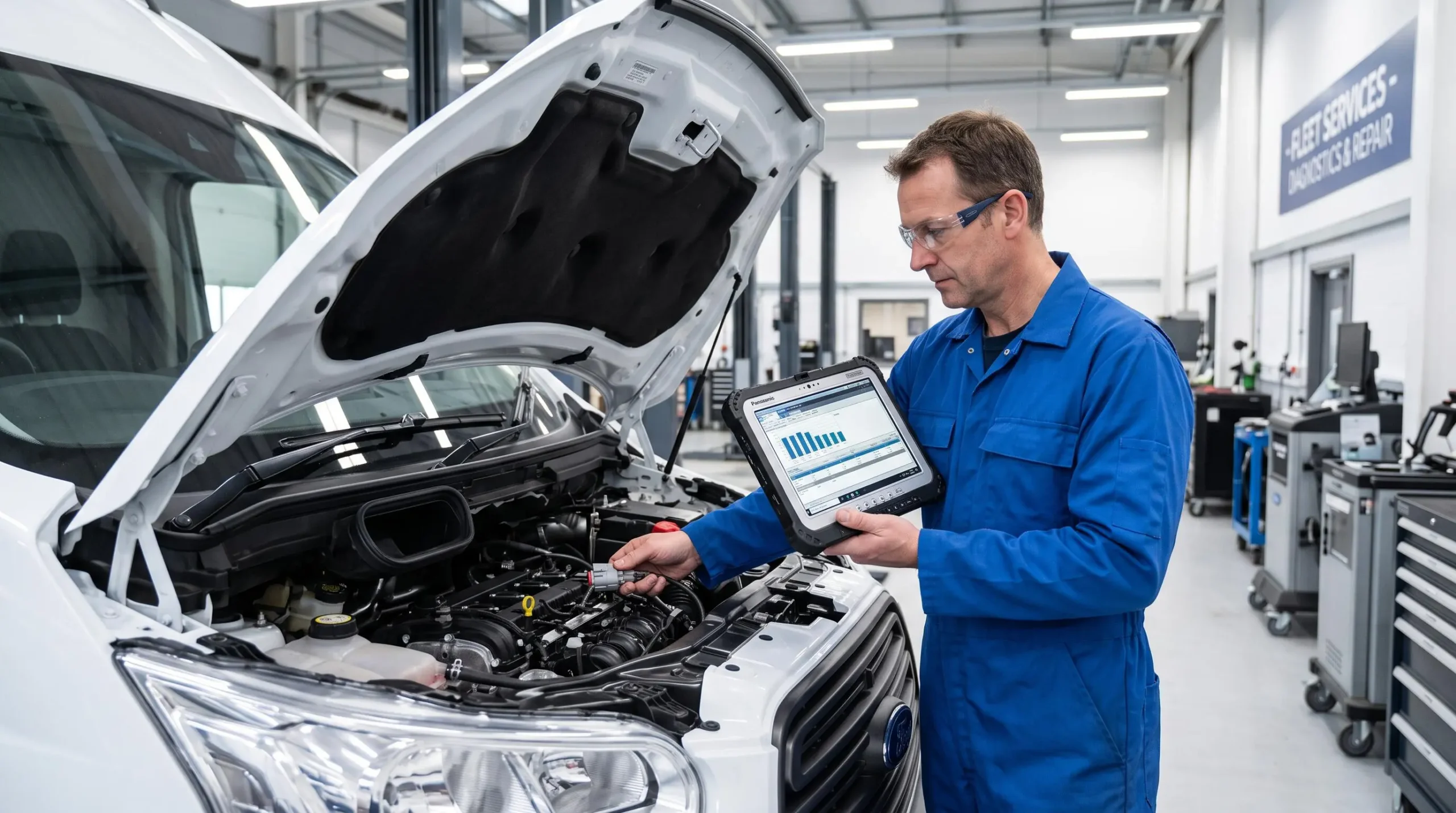
Asset utilization improvements emerge when visibility eliminates the guesswork inherent in manual allocation. A regional car rental operation implementing centralized fleet management gained real-time visibility across locations, enabling dynamic vehicle redistribution based on demand patterns. This operational intelligence reduced the gap between theoretical fleet capacity and actual revenue-generating activity. Predictive maintenance scheduling further protects utilization rates by shifting service timing from reactive breakdowns to planned intervals, minimizing unscheduled downtime that destroys revenue opportunities.
Compliance outcomes carry both risk mitigation and efficiency dimensions. Regulatory frameworks like GDPR impose specific requirements on vehicle and driver tracking, with location data qualifying as personal data requiring documented consent and purpose limitation. Platforms that automate compliance documentation, maintain audit trails, and generate regulatory reports reduce both the administrative burden and the liability exposure associated with manual record-keeping. Industry benchmarks consistently demonstrate that return on technology investment typically materializes within 6-18 months when fuel savings, utilization gains, and administrative efficiency improvements are aggregated.
Fleet management questions: implementation, selection, and adoption
How long does fleet management system implementation typically require?
Implementation duration varies based on fleet size and existing infrastructure complexity. Operations managing 50-100 vehicles with standard requirements typically complete deployment in 8-12 weeks, including telematics hardware installation, platform configuration, data migration, and user training. Larger enterprises with custom integration needs or legacy system dependencies may extend timelines to 4-6 months. The critical path involves hardware logistics and staff adoption rather than software configuration.
What criteria should guide fleet management software selection?
Prioritization depends on your operational pain points. If compliance documentation consumes excessive administrative time, prioritize platforms with automated tachograph integration and audit trail generation. If reducing idle time represents the primary concern, focus on real-time visibility and utilization analytics capabilities. Evaluate integration compatibility with existing ERP or accounting systems early in the selection process, as retrofit integration challenges often derail deployments that appeared promising during initial demonstrations.
How do you drive user adoption among drivers and operations staff?
Operational experience shows that emphasizing workflow improvements rather than surveillance aspects accelerates adoption. When drivers recognize that mobile apps eliminate paperwork, expedite check-in processes, and provide clear work assignments, resistance diminishes. Involve frontline staff in configuration decisions during implementation, address privacy concerns transparently with clear data usage policies, and demonstrate quick wins during pilot phases. Resistance typically concentrates among staff accustomed to manual workarounds that the new system makes obsolete.
What total cost components beyond software licensing should budgets account for?
Total cost of ownership includes telematics hardware installation (typically €150-300 per vehicle including labor), initial platform configuration and data migration services, user training programs, and ongoing technical support subscriptions. Software licensing models vary between per-vehicle monthly fees and tiered packages based on feature access. Budget planning should account for the full implementation investment rather than focusing exclusively on recurring subscription costs, as upfront deployment expenses often represent 40-50% of first-year total expenditure.
How do fleet management platforms scale as vehicle counts grow?
Cloud-based architectures accommodate growth through modular expansion rather than system replacement. Operators typically begin with core tracking and maintenance modules, then add specialized capabilities like driver behavior scoring, fuel card integration, or mobile inspection workflows as operational maturity increases. The scalability question focuses less on technical capacity and more on ensuring initial platform selection provides sufficient feature depth to support anticipated growth without forcing future migrations.
What role will emerging technologies play in fleet management evolution?
As fleet management platforms mature beyond reactive tracking toward predictive intelligence, the impact of artificial intelligence on autonomous decision-making represents the next operational frontier. Machine learning algorithms are beginning to optimize route planning based on historical traffic patterns, predict component failures before diagnostic codes trigger, and recommend dynamic pricing adjustments based on demand forecasting. The transition from descriptive analytics to prescriptive automation will define competitive differentiation in the coming years.